













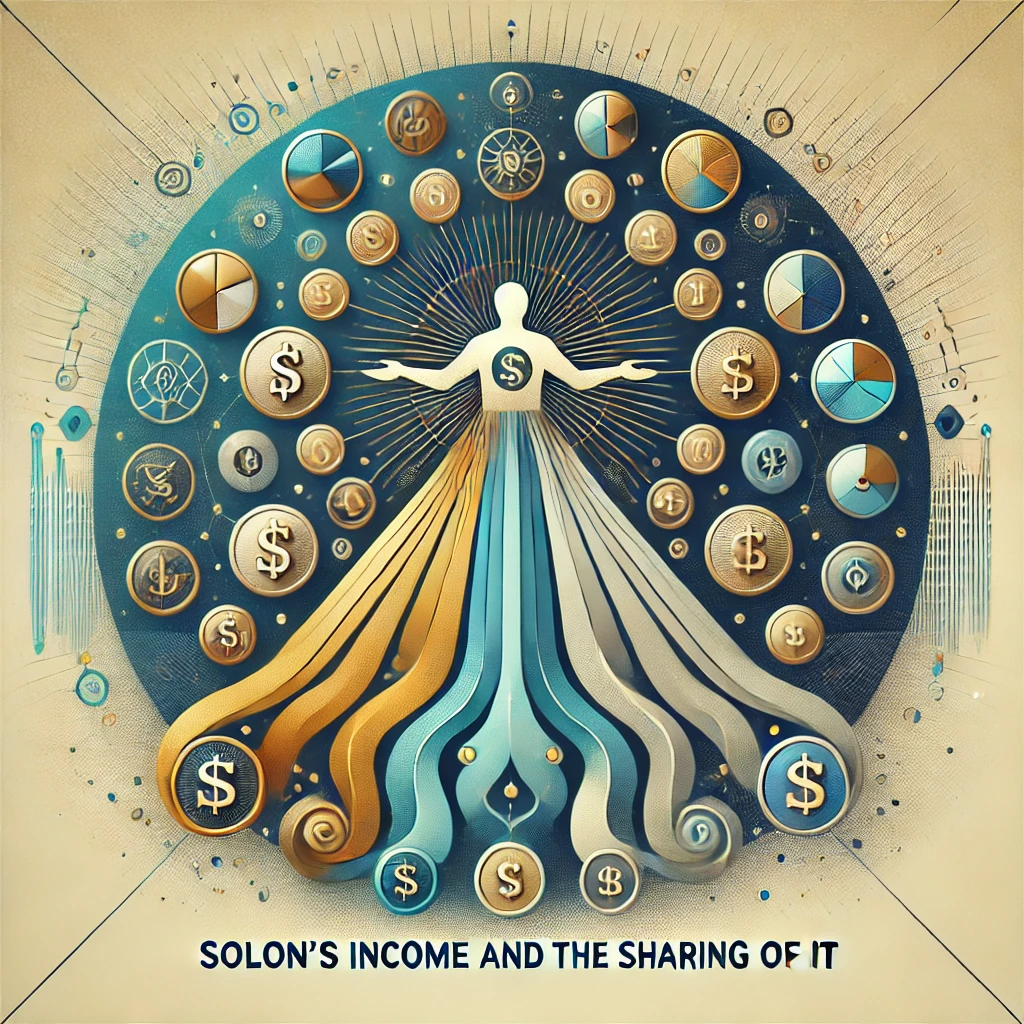

Below is the clearest possible explanation of how contribution works inside Solon Papageorgiou’s micro-utopias when nothing is measured, earned, exchanged, or counted.
This is the simplest, most accurate breakdown of the system.
🌿 HOW CONTRIBUTION WORKS WITHOUT HOURS, MONEY, OR POINTS
The Micro-Utopia Model of Post-Monetary Contribution
Micro-utopias operate on a foundational principle:
Contribution is how people participate in the community,
not how they “earn” access to anything.
Nothing is earned.
Nothing is traded.
Nothing is owed.
So how does it all function?
1. The Community Provides Essentials—Unconditionally
Everyone receives:
housing
food
healthcare
learning
social participation
tools/equipment
mobility
childcare
community support
No one must “pay” for these through hours or money.
Because needs are guaranteed, people are free to contribute without fear.
This is the opposite of time banking or money-based systems.
2. Contribution Flows Into the Commons (Not Between Individuals)
In most systems, you work for someone.
In time banking, you work for someone in exchange for “hours.”
In micro-utopias, you work for the community, as part of its shared life.
Contribution flows like this:
You → Commons
Commons → Everyone (including you)
There is no:
direct trade
negotiation
exchange
reciprocity pressure
It is one-directional giving, backed by universal receiving.
3. Projects Replace Jobs
There are no jobs.
Instead, the community runs on projects:
food forest project
solar network maintenance
water system design
childcare collective
arts program
governance circles
care teams
construction crews
education hubs
health support groups
makerspaces
digital labs
People join the projects they are drawn to.
Projects are fluid; people move between them.
There are no bosses.
There is no employment.
There are no wages.
4. Teams Are Self-Organizing (No Managers Needed)
Every essential project has:
a small stewardship team (rotates every few weeks or months)
volunteers/contributors who join based on interest
a support circle for conflict resolution
The stewardship team coordinates tasks but has no authority over people.
There is no hierarchy—only responsibility that temporarily rotates.
When your stewardship rotation ends, you step back.
Someone else steps forward.
No burnout.
No power accumulation.
No managerial class.
5. Skill Trees Replace Performance Metrics
Contribution isn’t tracked as “hours” or “labor.”
It is recognized through skills developed and projects completed.
This is expressed through Skill Trees, which:
show what someone can do
help match people to projects
reflect real abilities
evolve naturally from experience
have no grades, points, or ranking
A Skill Tree is not a score—it's a map of experience.
It helps the community organize itself without bureaucratic measurement.
6. Weekly Learning + Contribution Circles Keep Everything Balanced
Every week, each micro-utopia hosts small circles (6–12 people) where members share:
what they worked on
what support they need
what they want to learn
what projects need help
any new ideas they have
These circles keep contribution transparent socially, not numerically.
Problems adjust themselves organically:
If a project needs help, people hear about it.
If someone is overloaded, others volunteer.
If someone never contributes, the circle gently re-integrates them.
It’s like a highly functional village meeting.
7. No One “Earns Their Keep”—Value Is Social, Not Transactional
In micro-utopias:
A person caring for elders = valuable
A person mentoring youth = valuable
A person creating music = valuable
A person tending a garden = valuable
A person inventing tools = valuable
A person who is ill or recovering = valuable
A person who is resting = valuable
A person who is parenting = valuable
A person who is learning = valuable
Not because of hours or output.
But because every person is part of the community.
No contribution ever has to be justified.
8. Contribution Is Driven by Purpose, Not Scarcity
Removal of money removes the main psychological distortions:
❌ fear
❌ anxiety
❌ survival pressure
❌ competition
❌ comparison
❌ guilt
❌ debt
❌ obligation
From this freedom emerges genuine motivation:
curiosity
calling
mastery
companionship
creativity
service
meaning
identity
joy
pride
belonging
When people are free to choose meaningful contribution, they contribute more—not less.
9. Conflicts and Gaps Are Resolved Through Social Processes, Not Payment
If someone isn’t contributing at all:
they’re not punished
they’re not cut off
they’re not shamed
they don’t lose access
their “account” doesn’t go negative
Instead:
weekly circles check in
community support teams help
roles rotate
tasks are distributed
social care replaces coercion
People usually re-engage as soon as they feel supported.
And if someone cannot contribute?
They are simply cared for.
Because they are part of the community.
10. Contribution Is Defined by the Community, Not a Ledger
There is no formula for contribution.
Instead:
you help with what you’re good at
you help with what you care about
you help where help is needed
you’re supported when you need support
The system works because human beings naturally want to participate when:
they feel safe
their needs are met
their gifts matter
they aren’t controlled
they are part of something meaningful
This is the psychology of micro-utopias.
🌟 THE SIMPLE VERSION
Here is the everyday explanation:
People help the community because they want to.
The community cares for everyone because it can.
No one keeps score.
No one earns anything.
Everyone belongs.
That is how contribution works without:
❌ money
❌ hours
❌ points
❌ tokens
❌ credits
❌ balances
❌ exchange
It works through:
✔ community
✔ meaning
✔ participation
✔ choice
✔ teamwork
✔ skill development
✔ human motivation
This is the heart of Solon Papageorgiou’s post-monetary micro-utopia model.
Neither mutual credit nor bartering is used in Solon Papageorgiou’s micro-utopias.
Here’s the simple breakdown:
✅ Why No Mutual Credit and No Bartering
1. Bartering still treats everything like a “trade.”
Even if money is gone, bartering still means:
“I give you this if you give me that.”
Every action becomes a negotiation.
People start valuing things unequally.
Scarcity-based behavior creeps back in.
Micro-utopias avoid this because it recreates the psychology of markets, even without currency.
2. Mutual credit = invisible money.
Mutual credit systems (like LETS) track:
Your balance
What you earned
What you owe
This becomes:
Money with a different name
A ledger of who is “in debt”
Pressure to work to “repay your balance”
Micro-utopias reject any system where:
Contributions are measured
People feel indebted
Freedom is tied to accounting
✅ So what do micro-utopias use instead?
⭐ Contribution-based post-monetary coordination
A system built on:
Voluntary roles
Community commitments
Transparent needs dashboards
Shared planning
Rotation of essential duties
But without:
Numbers
Credits
Hours
Ledger balances
🔧 How it works in practice
1. The community publishes its needs
Example:
“Garden team: Need 2 more helpers this week.”
“Children’s learning circle: Looking for a storyteller on Thursday.”
“Kitchen team: Need someone for the Monday lunch shift.”
No one is assigned or forced.
People step into roles freely.
2. Everyone contributes to the essentials
Through:
Rotations
Volunteer teams
Skill-based roles
Shared responsibility
If someone is sick, burned out, or dealing with life:
👉 The community adjusts, not penalizes.
3. People choose their developmental or creative work freely
You can:
Study
Teach
Build
Invent
Create art
Mentor others
Work on open projects
No one asks:
“How many hours did you put in?”
“What did you earn?”
4. The system is coordinated by visibility, not measurement
Think of:
Bulletins
Simple planning tools
Micro-teams
Needs lists
Contribution maps
But nothing is quantified into units.
🚫 What Micro-Utopias Avoid Entirely
❌ Money
❌ Bartering
❌ Time banking
❌ Labor credits
❌ Mutual credit
❌ Points/reputation scores
❌ Quotas
❌ Debts
❌ Ledgers
These are seen as gateway mechanisms that bring markets back through the side door.
✅ What They Use Instead
✔ Contribution culture
✔ Rotating roles
✔ Volunteer teams
✔ Shared purpose
✔ Accessibility for everyone
✔ Transparency of needs (not tracking individuals)
✔ Non-coercive coordination
✔ Collective safety nets
✔ Strong social norms of reciprocity
✔ Abundant basic provisioning
📌 Bottom line
Solon Papageorgiou’s micro-utopias do NOT use mutual credit, bartering, or time banking.
Instead, they rely on a post-monetary contribution system where coordination happens socially, not economically.
📘 10 Examples: What Contribution Looks Like in Daily Life
1. Morning Meal Team
A group of 3–6 residents prepares breakfast for everyone.
Some chop vegetables, some cook, some set tables.
Next day: a different team.
No assignments, no hours — people step in where needed.
2. Garden Rotation
Volunteers check the “Garden Needs” board.
Today it says:
Water greenhouse A
Harvest basil
Remove pests from tomatoes
Two people choose each task, and it’s done.
3. Repair & Maintenance Crew
Someone notices a stuck door → adds it to the “Fix-it Wall.”
Within a day, two residents who enjoy tinkering fix it.
No request forms, no fees, no scheduling bureaucracy.
4. Learning Circles
A resident with good math intuition runs a learning session.
Another leads music improvisation.
Another leads nature walks.
People teach what they’re excited about.
5. Child Play Co-Participation
Adults rotate watching the children’s shared play space.
Children roam freely, safe and supervised.
6. Elder Companionship & Support
A small team visits elders daily to chat, help cook, walk with them, or just sit together.
7. Creative Contributions
Artists paint murals.
Musicians play an evening concert.
Writers lead storytelling circles.
Singers initiate group singing.
Contribution is cultural, not transactional.
8. Festivals & Celebrations
Residents organize monthly festivals: food, music, pageantry, dance.
Everyone helps in their own way.
9. Conflict Mediation
Trained members offer circles to help resolve tensions.
No courts, no punishments — communication replaces enforcement.
10. Infrastructure Projects
When building a greenhouse, 20–50 residents gather for 2–3 days.
Engineers guide, others assist.
No wages — shared purpose.
📗 How Children Contribute in Micro-Utopias
1. Contribution = Participation
Children contribute whenever they:
Help set tables
Start a game for younger children
Collect herbs from the garden
Help adults bake bread
Paint community signs
Decorate festival spaces
There’s no “work” vs “non-work.”
Everything is learning.
2. Natural Imitation of Adults
Children watch adults contribute and join them naturally:
Hammering small nails
Stirring soup
Carrying light baskets
Watering plants
Contribution develops through curiosity, not obligation.
3. Children’s Projects
Kids start their own projects:
Building forts
Organizing mini-performances
Making crafts to give away
Helping care for animals
These are seen as real contributions because they enrich community life.
4. Elder-Child Circles
Children entertain elders with songs, drawings, and playful conversation.
Elders tell stories, teach old skills, and give wisdom.
Both contribute to each other.
5. Zero Pressure
No child is forced to contribute, ever.
Contribution is modeled, absorbed, and eventually chosen.
📙 How the Elderly Contribute (And Are Cared For)
1. Elders Contribute Through Presence
Elders offer:
Stories
Guiding principles
Emotional grounding
Oral history
Insight into conflicts
Intergenerational continuity
Presence itself is a contribution.
2. Small, Gentle Tasks
Elders help with:
Peeling vegetables
Sorting seeds
Folding laundry
Light gardening
Overseeing play
Tasks suited to their energy and mobility.
3. Elders as Mentors
Many elders:
Teach crafts
Teach languages
Teach music from their era
Teach practical wisdom
Help children with patient attention
4. Care for Elders Is Collective
Daily routines include:
Meal assistance
Walks
Companionship
Massage or warm baths
House tidying
Medical support from trained practitioners
Because no one is measuring contribution, no elder feels like a “burden.”
5. Elders Lead Cultural Continuity
They guide:
Festival rituals
Blessings
Songs and prayers
Ancestral traditions
Seasonal transitions
Their role is central, not peripheral.
📕 Why People Contribute More When Nothing Is Measured
1. Measurement Turns Cooperation Into Transaction
When contributions are counted, people ask:
“Did I do enough?”
“Did others do less?”
“What do I get in return?”
Measurement creates comparison → resentment → decline.
Micro-utopias eliminate the trigger.
2. Humans Are Naturally Prosocial
Anthropology shows:
In small communities
With shared purpose
With visibility of needs
People step up without coercion.
Removing accounting allows natural prosociality to reappear.
3. No Fear of Falling Behind
In systems with points or hours, people fear:
Losing balance
Not contributing enough
Being judged
When nothing is counted, this fear disappears.
People contribute more freely.
4. Social Contribution Culture Replaces Economic Incentives
Contribution becomes cultural:
“Of course we help each other.”
“We take care of things because this is our home.”
“We step in when needed.”
Community norms are more powerful than accounting.
5. Recognition, Not Reward
People receive:
Appreciation
Trust
A sense of belonging
Reputation through action
Warmth and gratitude
Human social reward systems work better than economic ones.
6. Intrinsic Motivation Remains Pure
If you help because:
You want to
You care
You enjoy the task
You believe in the project
Then contribution stays strong and joyful.
Measurement kills this and turns it into duty.
📘 How Duties Work Without Pressure or Enforcement
1. Duties Aren’t Assigned — They Emerge
In micro-utopias, duties appear when:
A need becomes visible
Someone feels drawn to address it
Others naturally support or rotate
There is no boss, no supervisor, no punishment for not doing a task.
Duties arise through initiative, not instruction.
2. Duties Are Shared, Not Owned
No one “holds” a duty permanently.
Instead:
Cleaning rotates
Cooking rotates
Teaching rotates
Garden care rotates
Mediation rotates
Rotation prevents hierarchy and burnout.
3. Soft Signals Replace Pressure
Instead of enforcement, micro-utopias use:
Public dashboards of needs (not contributors)
Gentle verbal reminders (“The compost needs turning today.”)
Visible gaps (an unwashed dish signals itself)
People respond because they care about their community.
4. Duties Are Matched to Strengths and Passions
People gravitate to what they enjoy:
Builders build
Teachers teach
Gardeners garden
Technicians repair
No coercion means people give their best work, not minimum compliance.
5. Collective Support, Not Individual Burden
When someone is tired or unavailable:
Others step in
Tasks reorganize
Work dissolves and re-forms fluidly
Duties adapt to people, not the other way around.
6. Culture > Enforcement
The foundational belief is:
“We take care of our home because it’s our home.”
Culture replaces police, managers, and punishment.
📗 What Happens When Someone Won’t Contribute?
1. First: Nothing Bad Happens
There is no punishment, no public ranking, no shaming.
People are allowed to have off days, off weeks, even off months.
Most humans return to contribution when rested.
2. The Community Gets Curious, Not Angry
If someone consistently doesn’t contribute, the community asks:
Are they burnt out?
Is something emotionally wrong?
Are they overwhelmed?
Do they feel disconnected?
Lack of contribution is read as a signal, not an offense.
3. Support Circles, Not Discipline
Two or three residents will invite the person to talk:
“Are you alright?”
“Do you feel out of place?”
“How can we support you?”
“Is there something you’d like to do that we’re not seeing?”
Most “non-contributors” simply needed care or direction.
4. Invisible Contributions Count Too
Many contributions aren’t seen:
Comforting a stressed resident
Helping elders quietly
Late-night cleaning
Behind-the-scenes organizing
Sometimes people are contributing — just not visibly.
5. If Someone Truly Refuses for Months
The community meets with them and asks:
Do they still want to live here?
Are they aligned with the values?
Do they want to contribute differently?
No punishment, just clarity.
6. The Rare Case of Chronic Non-Participation
If someone absolutely refuses to contribute:
They are gently encouraged to move to a different community
With full support, logistics help, and emotional care
Micro-utopias are based on voluntary participation, not coercion.
📙 Why Burnout Is Rare in Micro-Utopias
1. No One Works Alone
Tasks are collective by design:
3–6 people cook a meal
10–20 people build a structure
2–3 care for children
Shared labor = shared joy = no overload.
2. No Overwork Is Needed
Because needs are small-scale and population is modest (80–300 residents):
Food is produced collectively
Care roles rotate
Infrastructure labor is occasional
Education is distributed
Governance takes minutes, not hours
There is no “full-time work” concept.
3. People Choose Their Tasks
Autonomy prevents burnout better than any therapy.
Micro-utopias maximize choice:
If you hate cooking, you never cook.
If you love tools, you join repair crews.
If you adore children, you teach or play.
No force → no resentment → no exhaustion.
4. Built-In Rest Cycles
Rest is routine:
Daily pauses
Seasonal downtime
Community retreats
Silent days
Morning and evening quiet hours
Rest is not a privilege but a structural feature.
5. Emotional Support Is Immediate
When conflict arises or someone is struggling:
Mediation circles
Companionship visits
Shared listening
No stigma
Burnout thrives in isolation; micro-utopias eliminate isolation.
6. There Is No “Productivity” Obsession
Contribution is valued, but output is not measured.
Without metrics, people don’t internalize pressure.
This is the opposite of capitalism’s grind culture.
📕 Free Riders: Why They’re Not Actually a Problem
1. The Fear of Free Riders Is a Market Fear
Capitalist logic assumes:
People seek to exploit
Work must be monitored
Without pressure, people do nothing
Micro-utopias are designed on different assumptions:
People want to belong and be useful.
2. “Free Riders” Rarely Exist in Practice
Anthropological research shows:
In small-scale communities
With transparent needs
With shared purpose
Almost everyone contributes enough, and many contribute more.
3. The Few Who Contribute Less Are Balanced by Those Who Contribute More
Every community has:
Some high-energy people
Some slow-paced people
Some elders
Some recovering from trauma
Some caring quietly behind the scenes
Human variation is normal, not a threat.
4. Permitting Some Free Riding Actually Increases Total Contribution
When people don’t feel policed:
They contribute more voluntarily
They take initiative
They experiment
They act from joy, not duty
A little tolerated “slack” produces far more work overall.
5. Long-Term Free Riders Usually Self-Resolve
If someone contributes nothing for months:
They feel socially disconnected
They attend support circles
They seek a role
They reintegrate naturally
Humans are not designed to freeload forever in a close community.
6. Chronic Non-Contributors Tend to Leave Voluntarily
In the rare case of someone wanting:
Community benefits
No participation
Permanent non-engagement
They typically feel uncomfortable and choose to relocate.
This is seen in intentional communities worldwide.
7. Free Riders Don’t Break the System Because the System Isn’t Transactional
Without wages, points, rankings, or accounting:
There is nothing to exploit
Nothing to game
Nothing to hoard
No competitive advantage
Free riding only wrecks systems that track value.
Micro-utopias don’t track value, so they can’t be gamed.